

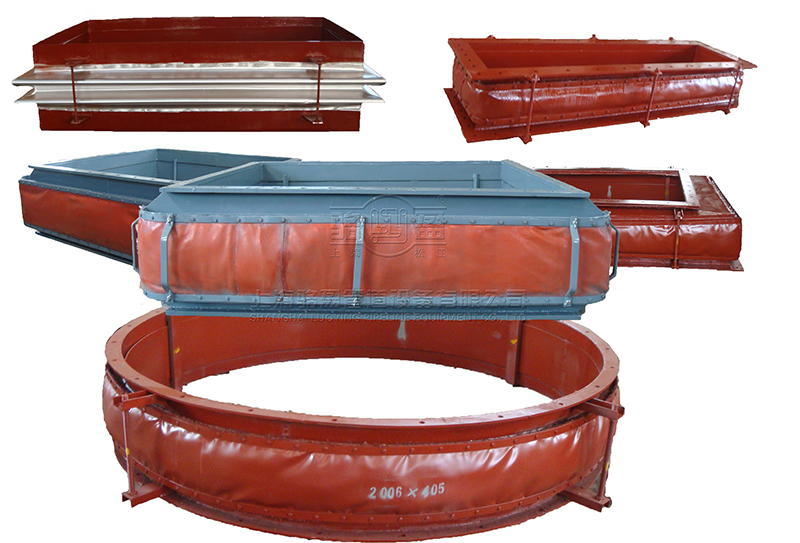
Fabric expansion joints perform a function of compensating for duct misalignment and duct thermal growth typically in power plants and other ducting systems. Fabric expansion joints are found wherever there is a need to convey hot media in low pressure applications such as “in flowing air” and “out flowing gas” in large combustion processes.
The fabric expansion joints provide both insulation and protection against wear, while effectively compensating for thermal growth and vibration.
The advantages and benefits of fabric expansion joints vary by the application, environment, and other factors related to an industrial process.
The fabric expansion joints offer superior flexibility and will handle large thermal movements, in a relatively short space.
Fabric expansion joints can absorb larger movements than metal expansion joints and do so without spring loads. This is critical to limiting thermally induced stresses in ducting, ducting supports, and related equipment.
These expansion joints are used to add flexibility to industrial ducting systems and fan/blower connections to absorb thermal growth, isolate vibration and noise, and allow for misalignments. Their large movements in a given space, small spring rates, and large temperature range give them advantage not available with other types of joints. They are needed in a wide array of industries, including power, petrochemical, pulp & paper, along with countless other industrial facilities. A variety of styles and materials are available to meet the specific requirements of any given application.
The high quality fully molded duct expansion joint types are made from reinforced rubber elastomers, and have the advantage of integral flanges and easy installation. They can be made with or without molded arches, which can provide additional movement and reliability.
Fluoroplastics (PTFE), Fluoroelastomer (FKM), neoprene (250F), and silicone (450F), If needed, the reinforcement can also be changed to aramid blend, polyester, and others.
Fossil Fired Power Plant, Pulp and Paper Plant, Air Heater to Coal Pulverizers, Cement, Clinker Cooler to Heat Exchanger, etc.
Oil, Clean air media, 600°F to 750°operating temperature, fuel gas media with heavy particulate

LUOYING
DN5-300
Up to 1 bar
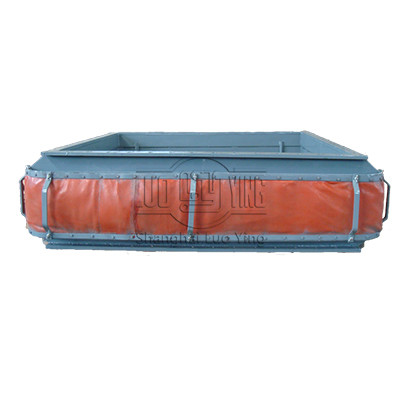
Rectangular duct fabric compensator is composed by rubber and fabric composite materials, steel flange, sleeve, thermal insulation materials. Mainly used in various fan, air duct for flexible connection. The function is shock absorption, noise reduction,
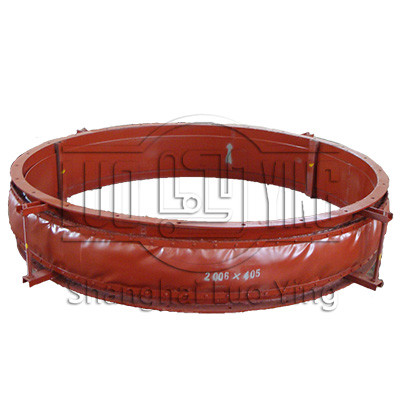
LUOYING Fabric Expansion Joints are non-metallic flue duct expansion joints that provide stress relief for piping and ducting systems by absorbing thermal growth and shock, isolating mechanical vibration, and allowing for misalignments.LUOYING expansi...
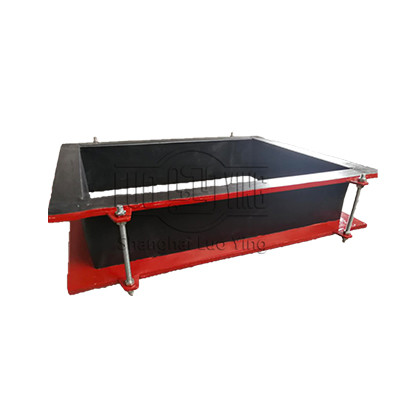
Air flue rubber joint compensator is composed by rubber composite materials, steel flange, sleeve, thermal insulation materials. Mainly used in various fan, air duct for flexible connection. The function is shock absorption, noise reduction, sealing, medi
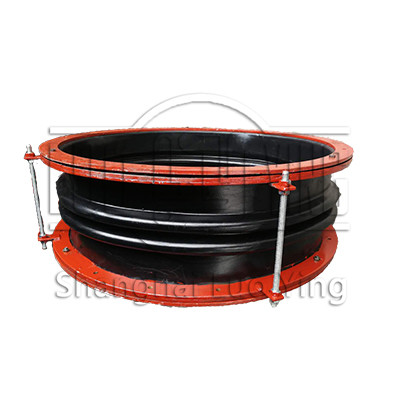
Flue duct expansion jointsare custom engineered to handle low pressure (±3 psig) applications with temperatures ranging from -100°F to more than 2000°F. Industry Proven materials and precise engineering go into every LUOYING Fabric Expansion joint.
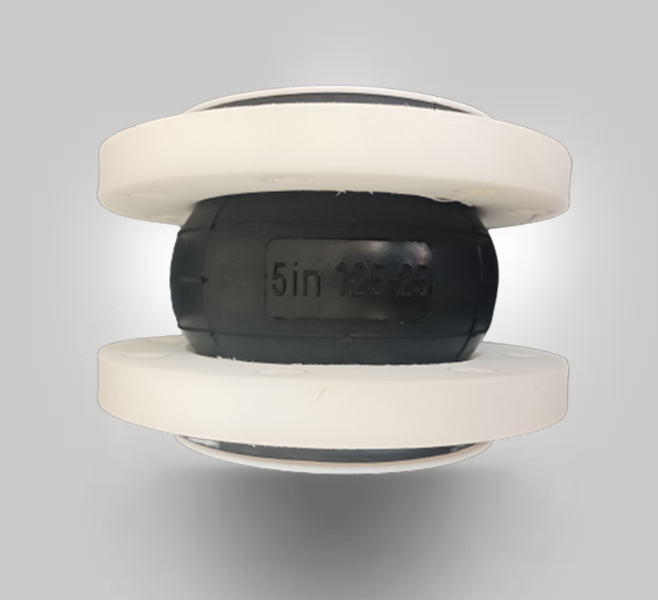
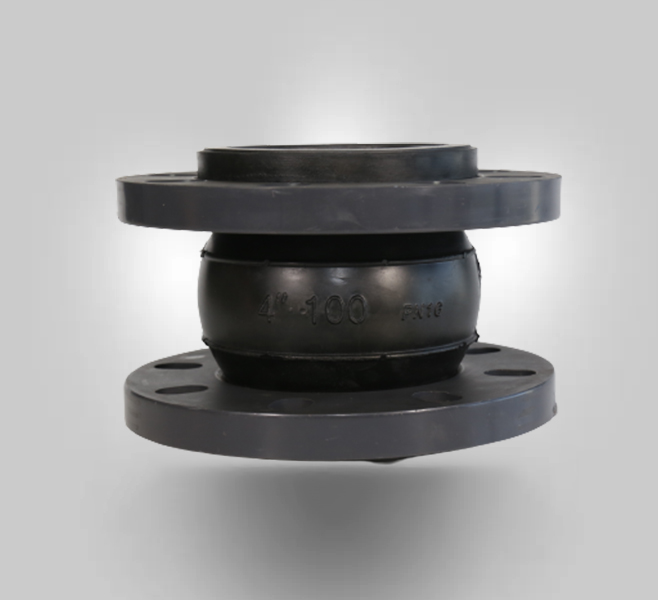
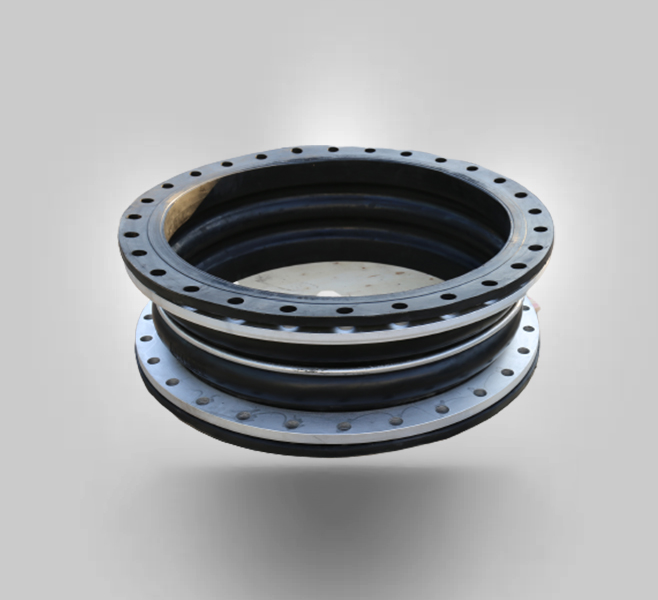
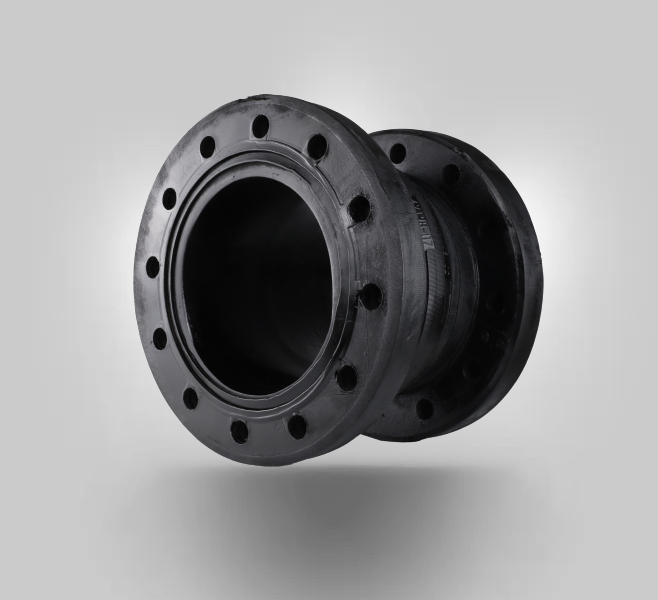
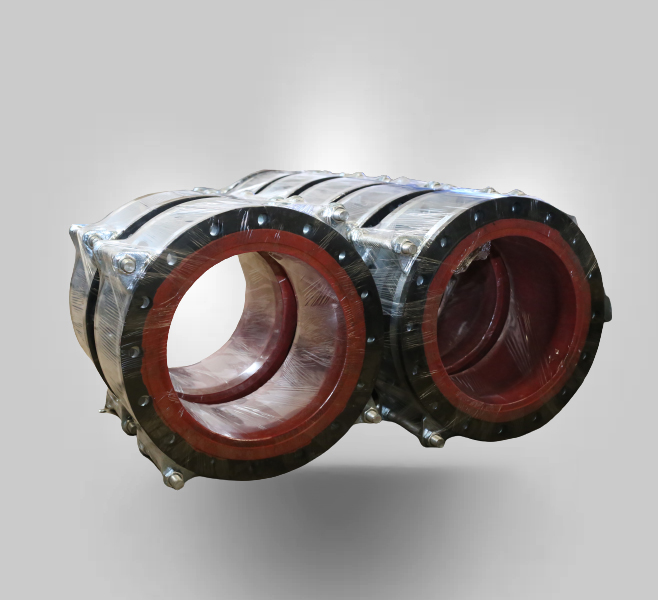
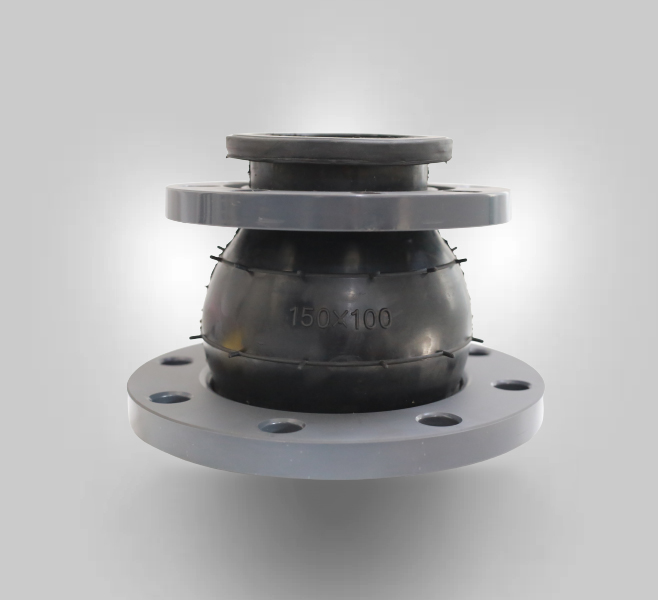
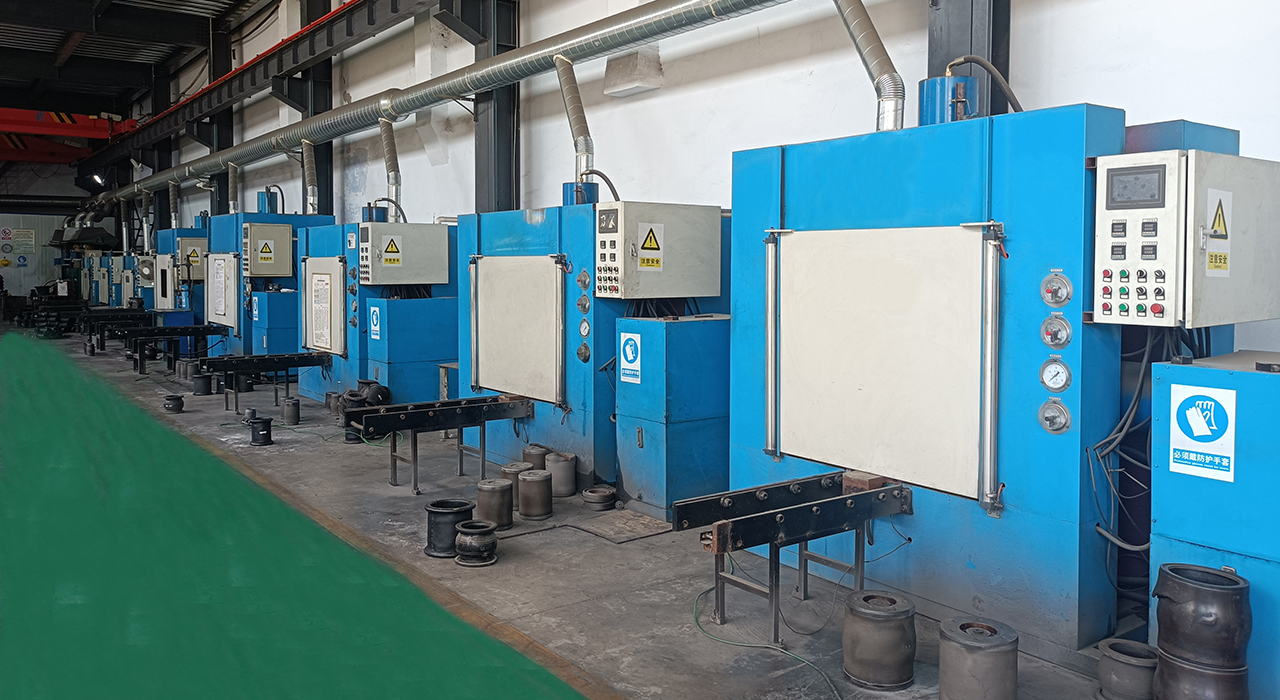
Rubber expansion joints are mainly manufactured by manual wrapping of rubber sheets and fabric reinforced rubber sheets around a bellows-shaped product mandrel. Besides rubber and fabric, reinforced rubber and/or steel wires or metal rings are added for additional reinforcement. After the entire product is built up on the mandrel, it is covered with a winding of (nylon) peel ply to pressurize all layers together. Because of the labor-intensive production process, a large part of the production has moved to eastern Europe and Asian countries.
Some types of rubber expansion joints are made with a molding process. Typical joints that are molded are medium-sized expansion joints with bead rings, which are produced in large quantities. These rubber expansion joints are manufactured on a cylindrical mandrel, which is wrapped with bias cut fabric ply. At the end the bead rings are positioned and the end sections are folded inwards over the bead rings. This part is finally placed in a mold and molded into shape and vulcanized. This is a highly automated solution for large quantities of the same type of joint.
New technology has been developed to wind rubber and reinforcement layers on the (cylindrical or bellows-shaped) mandrel automatically using industrial robots instead of manual wrapping. This is fast and accurate and provides repeatable high quality. Another aspect of using industrial robots for the production of rubber expansion joints is the possibility to apply an individual reinforcement layer instead of using pre-woven fabric. The fabric reinforcement is pre-woven and cut at the preferred bias angle. With individual reinforcement it is possible to add more or less fiber material at different sections of the product by changing the fiber angles over the length of the product.
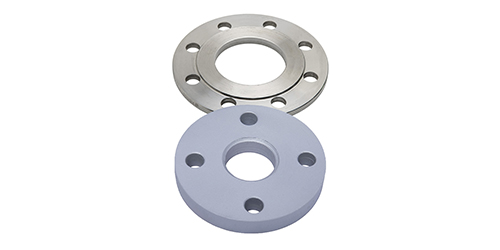
Piping components can be bolted together between flanges. Flanges are used to connect pipes with each other, to valves, to fittings, and to specialty items such as strainers and pressure vessels. A cover plate can be connected to create a "blind flange" Flanges are joined by bolting, and sealing is often completed with the use of gaskets or other methods. Mechanical means to mitigate effects of leaks, like spray guards or specific spray flanges, may be included. Industries where flammable, volatile, toxic or corrosive substances are being processed have greater need of special protection at flanged connections. Flange guards can provide that added level of protection to ensure safety.
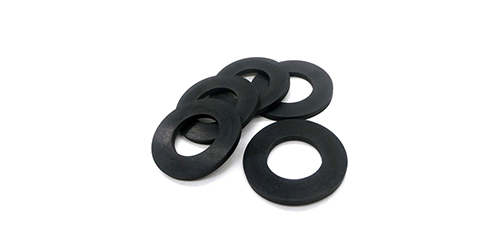
Fasteners are used for fastening and securing materials such as wood, metal, plastic, or concrete. They include nuts and bolts, threaded rods, structural bolts, machine screws, wedge anchors, washers, rivets, and more in a variety of types and sizes, including metric and inch.
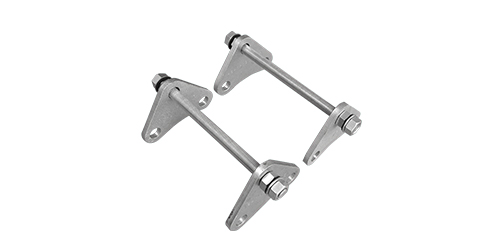
In systems that have a media with significant particulate content (i.e. flash or catalyst), a barrier of ceramic fiber can be utilized to prevent corrosion and restricted bellows flexibility resulting from the accumulation of the particulate. Purge connectors may also be utilized to perform this same function. Internal liners must also be included in the design if the expansion joint includes purge connectors or particulate barriers.
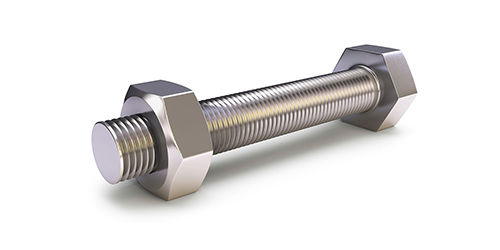
A gasket is a mechanical seal which fills the space between two or more mating surfaces, generally to prevent leakage from or into the joined objects while under compression. It is a deformable material that is used to create a static seal and maintain that seal under various operating conditions in a mechanical assembly.