

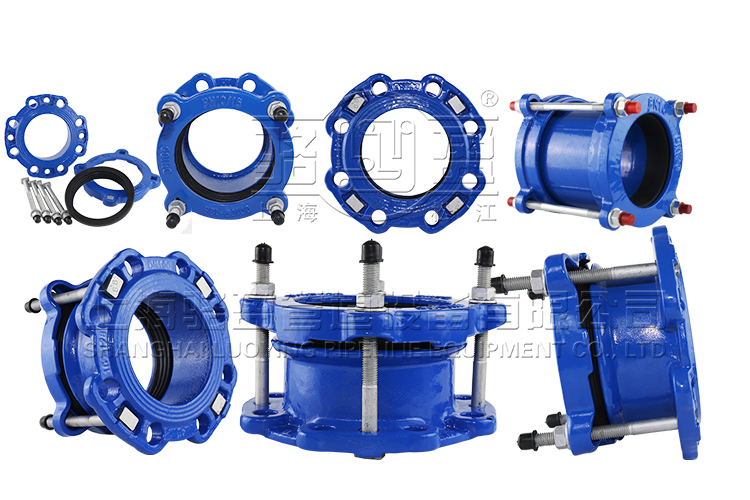
Dismantling joints play a decisive role in the design and layout of pipelines and valves. The dismantling joints are double flanged fittings that allow longitudinal adjustment in flanged pipe systems. Thanks to this adjustability of the dismantling joint, the valve can be fitted next to the dismantling joint, and the dismantling joint can be to set to the exact length required prior to being securely connected to flanges. Dismantling joints provide a simple method for installation and removal of flanged valves so also for subsequent maintenance. Typical applications include water treatment, sewage treatment, power generation and pumping stations. The dismantling joint guarantees fast installation and removal, thus contributing to increased efficiency and reducing site operations and down time.
Carbon Steel, ductile cast iron,stainless steel AISI 304L or AISI 316L
stainless steel bolts, zinc plated, upon request
Chemical, construction, water supply, drainage, petroleum, light and heavy industry, refrigeration, sanitation, plumbing, fire fighting, electric power, etc.

LUOYING
DN50-DN1500
PN 10,PN 16,PN 25
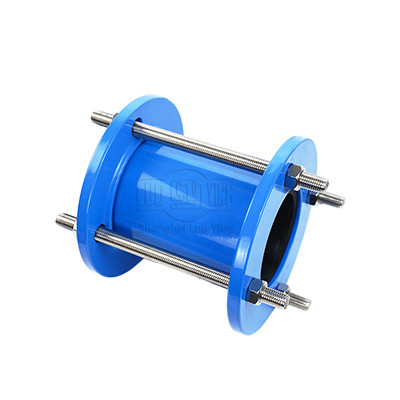
Dresser Coupling Joint on the basis of absorbing foreign advanced technology,combined with the actual needs of the research and development of a new pipeline connector,reasonable product structure design,reliable sealing performance;ends The socket connection, installation and removal easy.Suitable for connection to transport water,oil,gas and particulate powder steel pipe,cast iron pipe,ductile iron pipe.
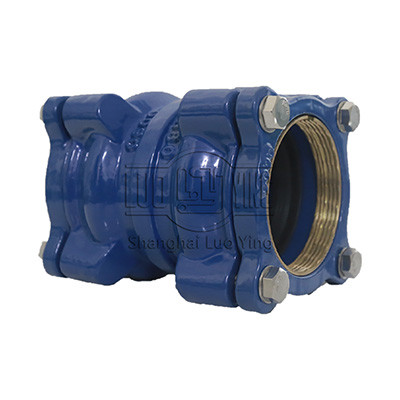
Between end-rings and sleeve, grip rings, press rings and gaskets are positioned. The end-rings are pressed onto the sleeve when the bolts are tightened. The rubber gasket, pressed by the press ring and grip ring, then completely fills up the space between pipe and coupling.
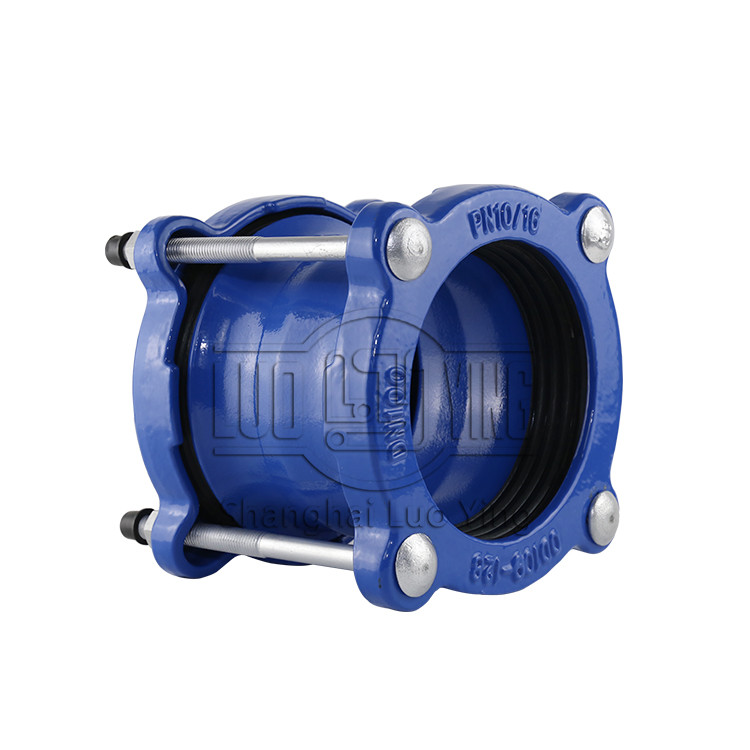
Used to join two pipes or tube spigot ends,Designed to be connected to pipes of different materials, or for use with one material only, couplings are used to join two pipes or tube spigot ends.
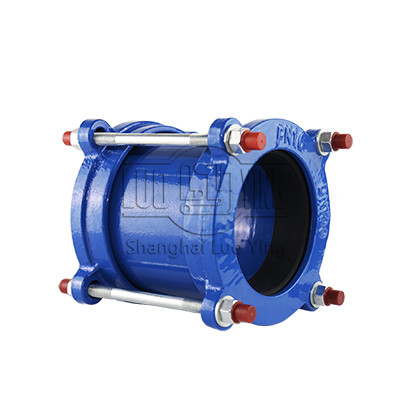
The expansion joint is mainly composed of a body, a telescopic sleeve, a gland, a sealing ring and a bolt. The telescopic body, telescopic sleeve and gland are made of 16MnR, and the sealing ring is made of NBR sealing, which has good water tightness and
The coupling consists of a sleeve that is placed between two end-rings. Between end-rings and sleeve, grip rings, press rings and gaskets are positioned. The end-rings are pressed onto the sleeve when the bolts are tightened. The rubber gasket, pressed by the press ring and grip ring, then completely fills up the space between pipe and coupling.
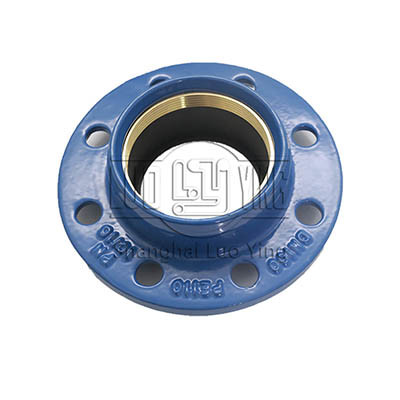
Tensile combination flanges for PE, PVC and ductile iron pipes, and non-tensile combination flanges for PVC, steel and ductile iron pipes. The design features a flexible positioning and chamfering of the pipe and a big angular deflection.
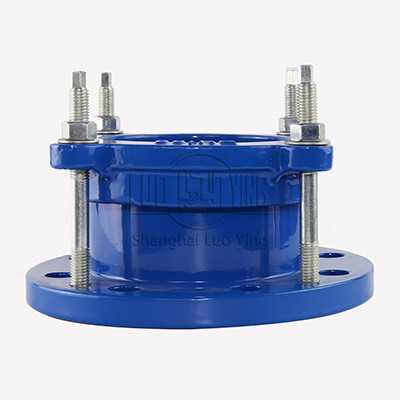
Universal straight fittings, stepped fittings and flange adapters for cast iron, ductile iron, steel, uPVC and asbestos cement pipes. Bolts and nuts with anti-friction coating provide long-lasting corrosion protection and allow for angular offsets of up to ±4°, so they are easy to install.
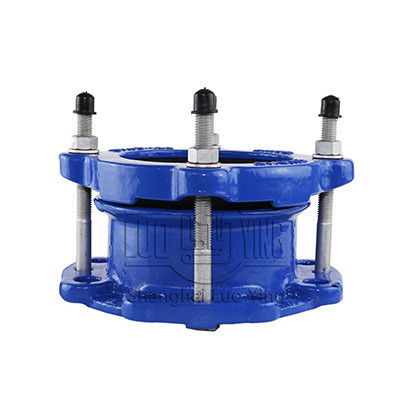
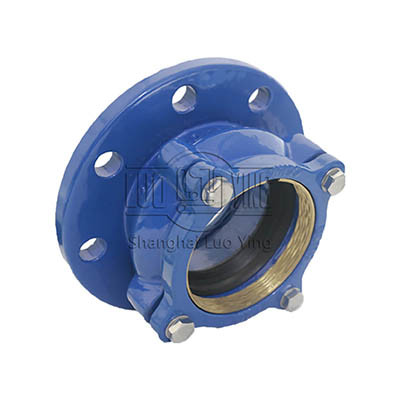
Flange adaptor couplings provide an effective means for inserting a flange into a pipeline for connection to another flanged component or valve. These adaptors are suitable for use in potable water; non-potable water and wastewater pipelines. Working pre
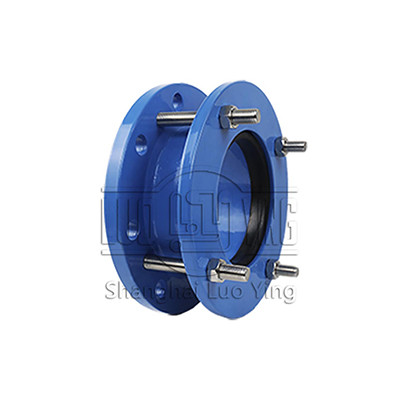
Flange adaptor couplings provide an effective means for inserting a flange into a pipeline for connection to another flanged component or valve. These adaptors are suitable for use in potable water; non-potable water and wastewater pipelines.
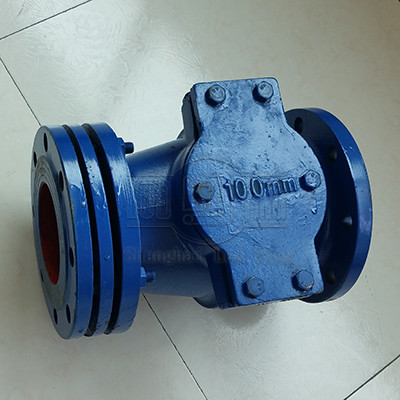
Filter Expansion Joint, the lastest design for double uses, is the new coming pipeline facility with its compact structure, small size and light weight.1×1-50-600 horizontal screw-wing water meter without filter mesh, can block the water with the impurities (such as sand, water grass or block). Thus, it is needed to equip the pipes with the water-filtering tanks. But, owing to its big bore and connection with flanges, expansion joint is in need for easy water meter installation and maintenance.
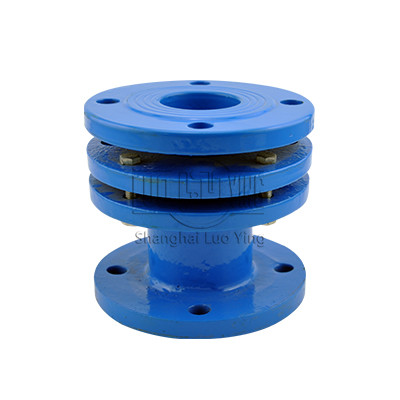
Flexible sleeve expansion joint provides great convenience for water supply pipeline,water tower,water pump,water meter and valve to install and detach.It also can compensate the expansion or contraction caused by temperature change.
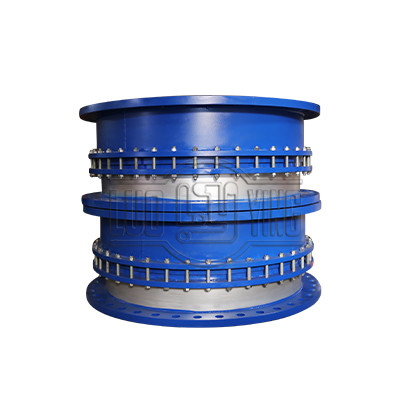
Thermodynamic compensator is mainly applied axial compensation, also has superior bending capacity, so I do not take into account the impact of sink pipes. Buried corrugated sleeve of compensation under the protection of housing and orientation compensation for the realization of freedom stretching, and other properties the same as ordinary bellows.
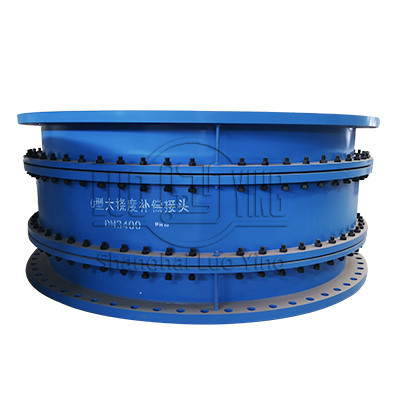
Large Flexible Dismantling Joint is a new type of pipe connector researched and developed based on the facts of the development of our country and absorption of foreign advanced technology.The main structures are mde of short pipe flange,gland,sliding tub
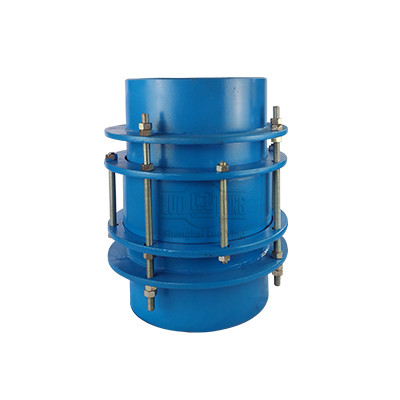
Covering Limited Telescopic Dismantling Joint is improved by adding the limited device on the basis of loose flexible rubber joint. Fit it with double nut at the maximum compensation volume, the product functions as limiting the position of rubber joint. It secures the safe operation of the pipe efficiently; especially applies to the pipeline which vibrates fiercely, be with somewhat deflection, or is on the corner.
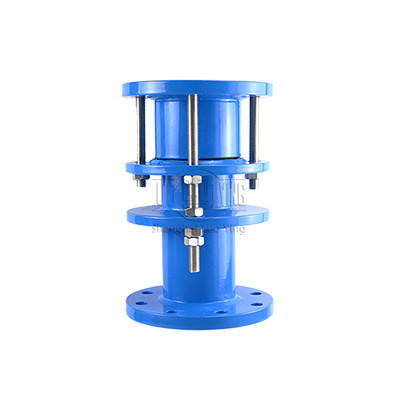
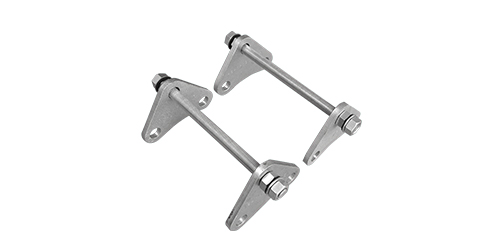
Double Flange Dresser Coupling supplier is used to connect both ends with flange, when installation, adjust product both ends connection length, opposite angle evenly tighten the gland bolts, then adjust limited nut, so the pipe can expand freely within the expansion range, locking the expansion amount, the safe operation of pipe.
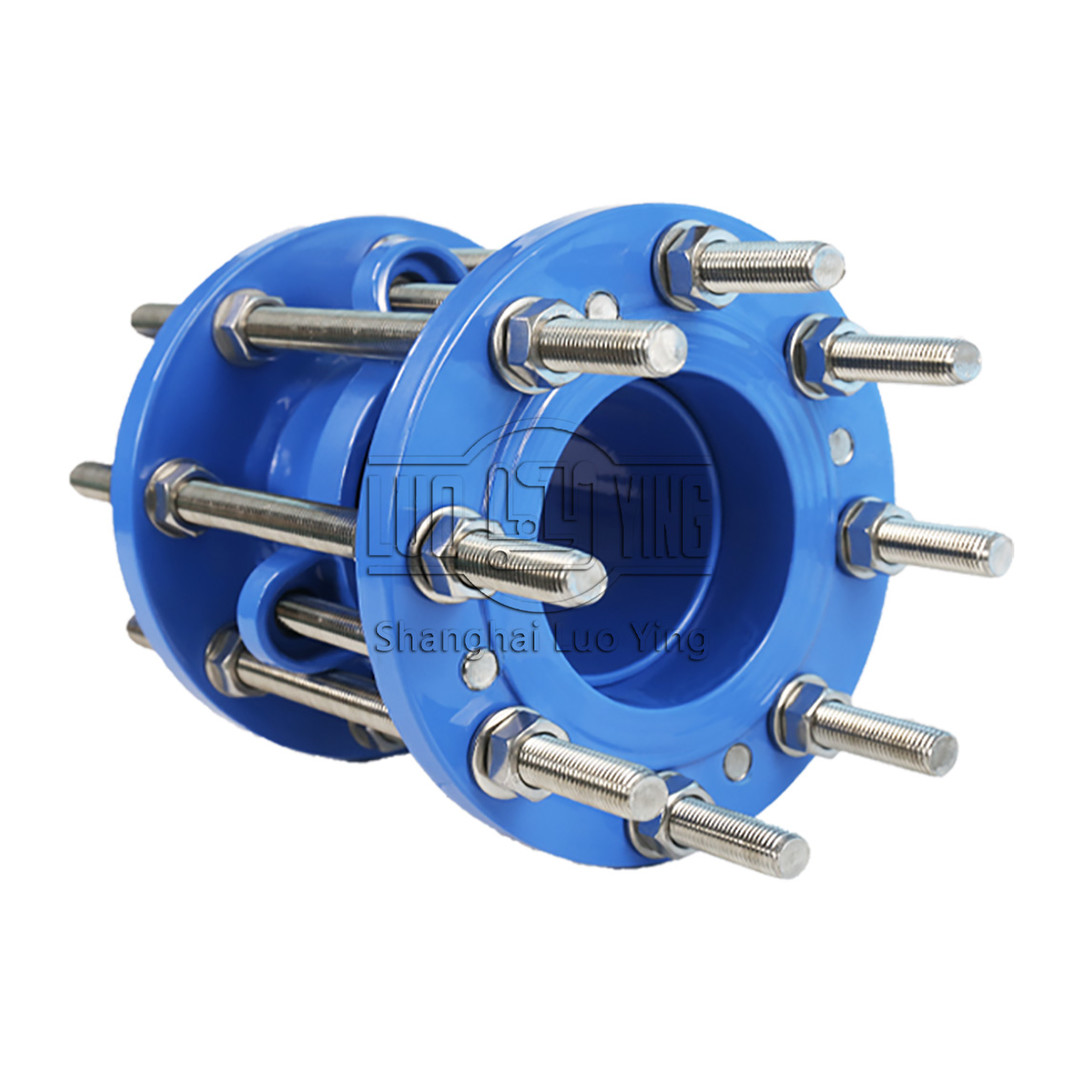
Dismantling Joints Seller is designed to be the final closing piece in the pipe network,to ease the assembling and disassembling for later maintenance of a pump or valve.A standard adjusting range of 50mm on length and a small lateral and angular
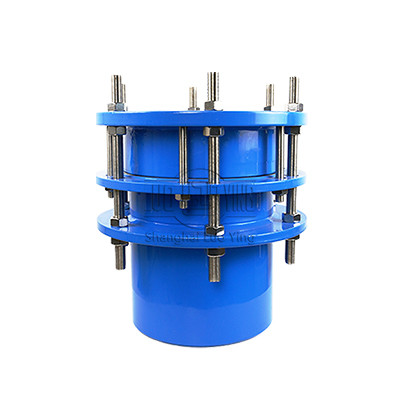
Single flange transmission joint is used to connect Flange on the one side and weld pipe on the other,modulate the product's length in between.Screw down bolts after installation to integrate the structure and guarantee a ceitain shift which will facilit
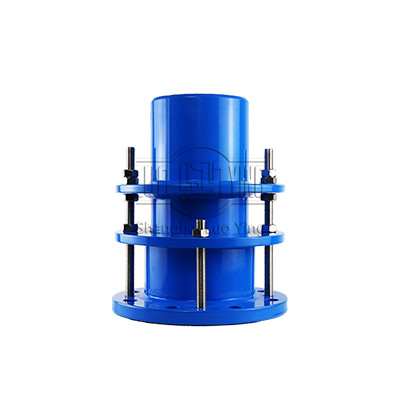
Single Flange Dresser Coupling is formed by adding a limit device to the basic sleeve Type Expansion Joint and locked at maximum expansion by double nut.The pipeline can thus freely expand in certain limit. When maximum valve is reached,it will be limited
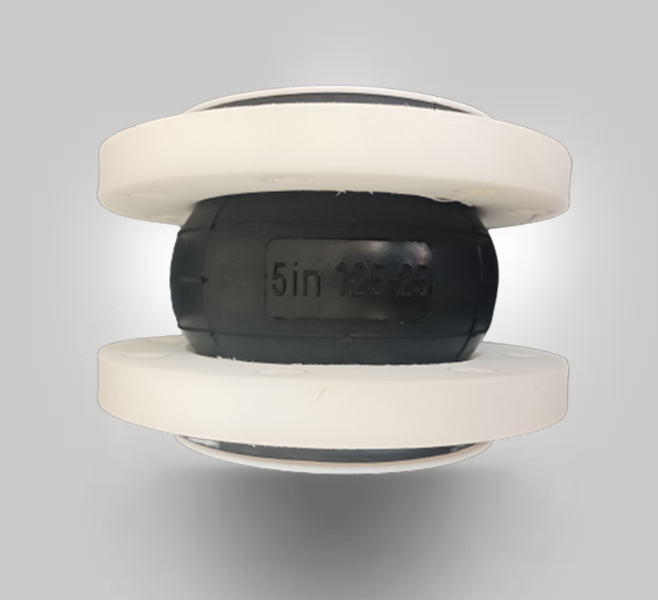
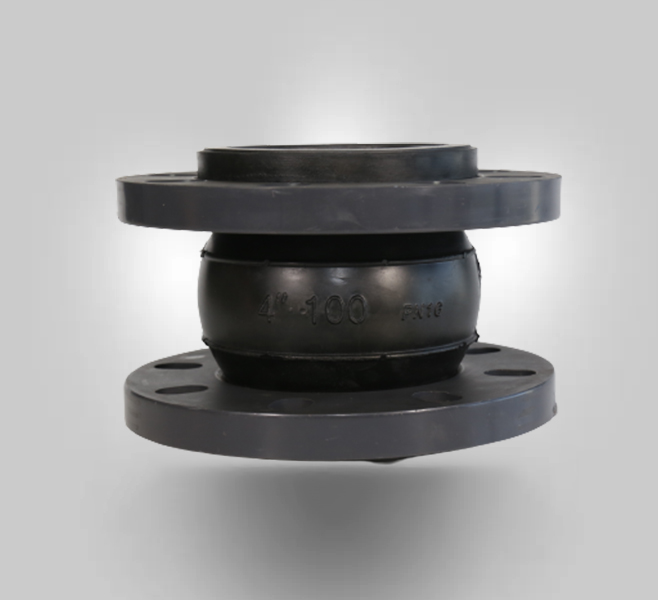
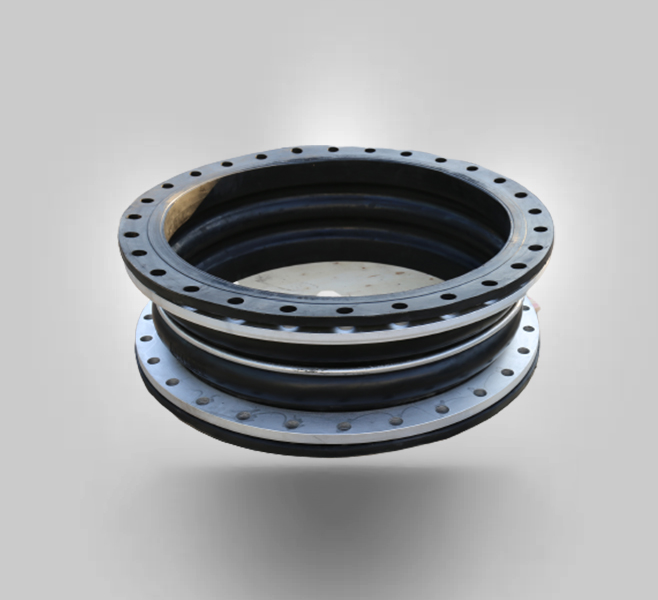
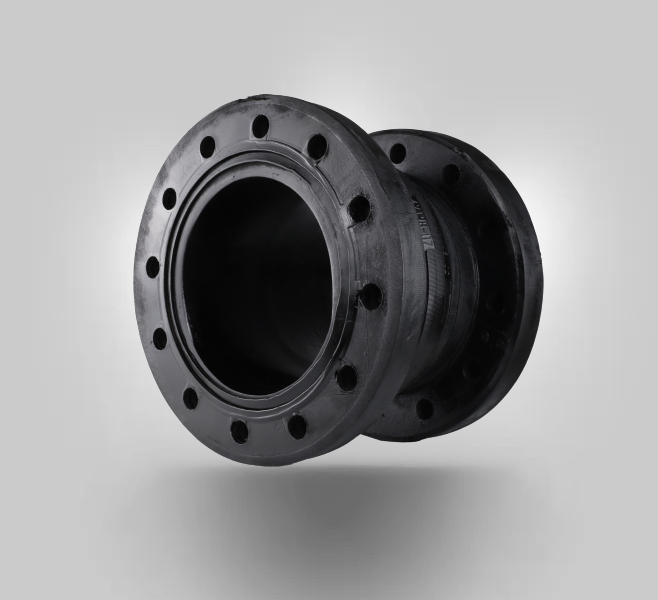
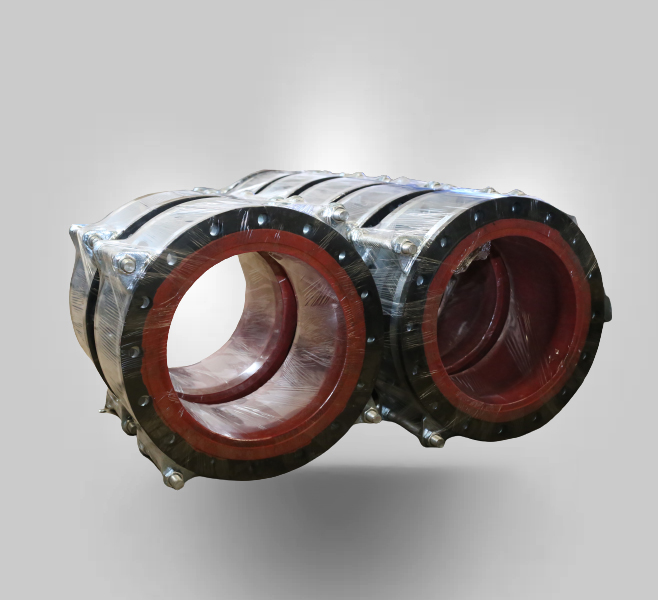
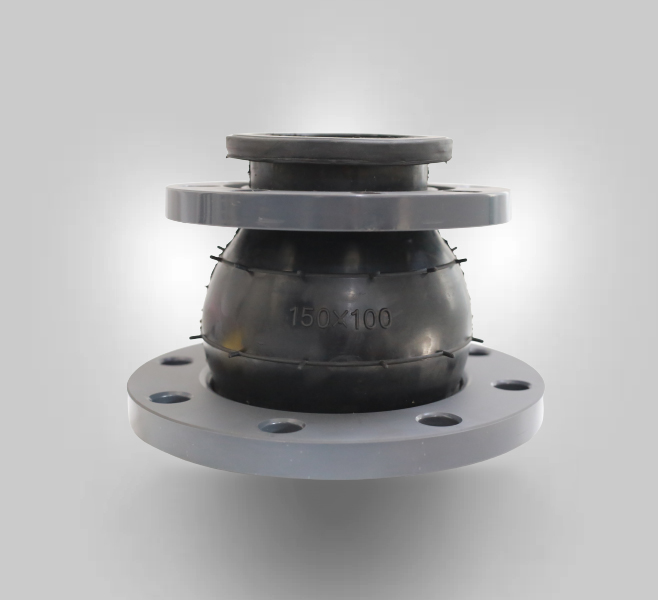
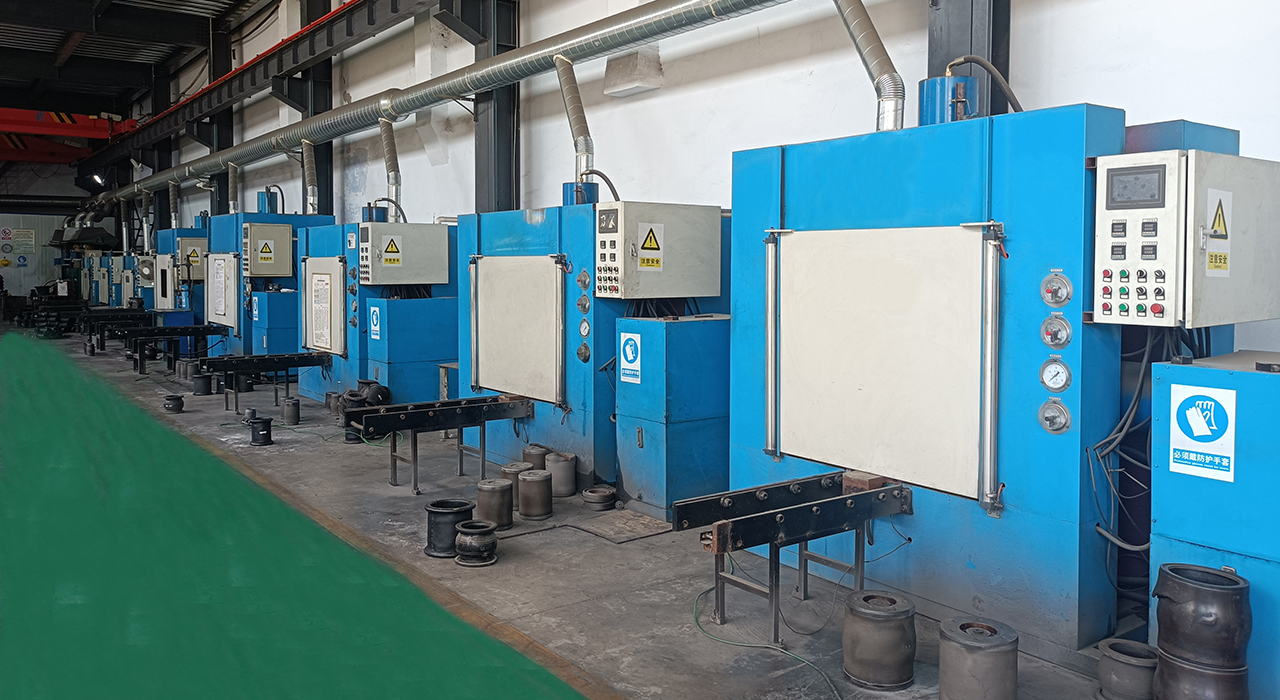
Rubber expansion joints are mainly manufactured by manual wrapping of rubber sheets and fabric reinforced rubber sheets around a bellows-shaped product mandrel. Besides rubber and fabric, reinforced rubber and/or steel wires or metal rings are added for additional reinforcement. After the entire product is built up on the mandrel, it is covered with a winding of (nylon) peel ply to pressurize all layers together. Because of the labor-intensive production process, a large part of the production has moved to eastern Europe and Asian countries.
Some types of rubber expansion joints are made with a molding process. Typical joints that are molded are medium-sized expansion joints with bead rings, which are produced in large quantities. These rubber expansion joints are manufactured on a cylindrical mandrel, which is wrapped with bias cut fabric ply. At the end the bead rings are positioned and the end sections are folded inwards over the bead rings. This part is finally placed in a mold and molded into shape and vulcanized. This is a highly automated solution for large quantities of the same type of joint.
New technology has been developed to wind rubber and reinforcement layers on the (cylindrical or bellows-shaped) mandrel automatically using industrial robots instead of manual wrapping. This is fast and accurate and provides repeatable high quality. Another aspect of using industrial robots for the production of rubber expansion joints is the possibility to apply an individual reinforcement layer instead of using pre-woven fabric. The fabric reinforcement is pre-woven and cut at the preferred bias angle. With individual reinforcement it is possible to add more or less fiber material at different sections of the product by changing the fiber angles over the length of the product.
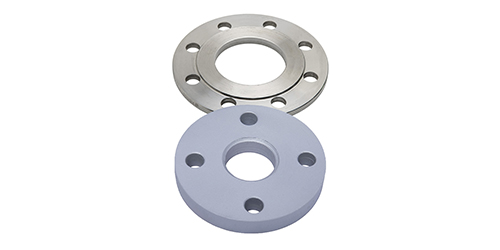
Piping components can be bolted together between flanges. Flanges are used to connect pipes with each other, to valves, to fittings, and to specialty items such as strainers and pressure vessels. A cover plate can be connected to create a "blind flange" Flanges are joined by bolting, and sealing is often completed with the use of gaskets or other methods. Mechanical means to mitigate effects of leaks, like spray guards or specific spray flanges, may be included. Industries where flammable, volatile, toxic or corrosive substances are being processed have greater need of special protection at flanged connections. Flange guards can provide that added level of protection to ensure safety.
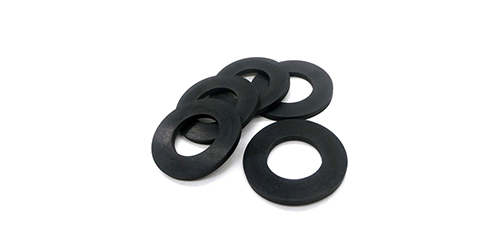
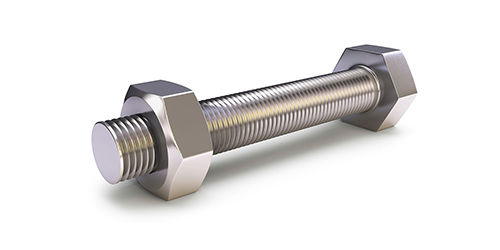
Fasteners are used for fastening and securing materials such as wood, metal, plastic, or concrete. They include nuts and bolts, threaded rods, structural bolts, machine screws, wedge anchors, washers, rivets, and more in a variety of types and sizes, including metric and inch.
In systems that have a media with significant particulate content (i.e. flash or catalyst), a barrier of ceramic fiber can be utilized to prevent corrosion and restricted bellows flexibility resulting from the accumulation of the particulate. Purge connectors may also be utilized to perform this same function. Internal liners must also be included in the design if the expansion joint includes purge connectors or particulate barriers.
A gasket is a mechanical seal which fills the space between two or more mating surfaces, generally to prevent leakage from or into the joined objects while under compression. It is a deformable material that is used to create a static seal and maintain that seal under various operating conditions in a mechanical assembly.