

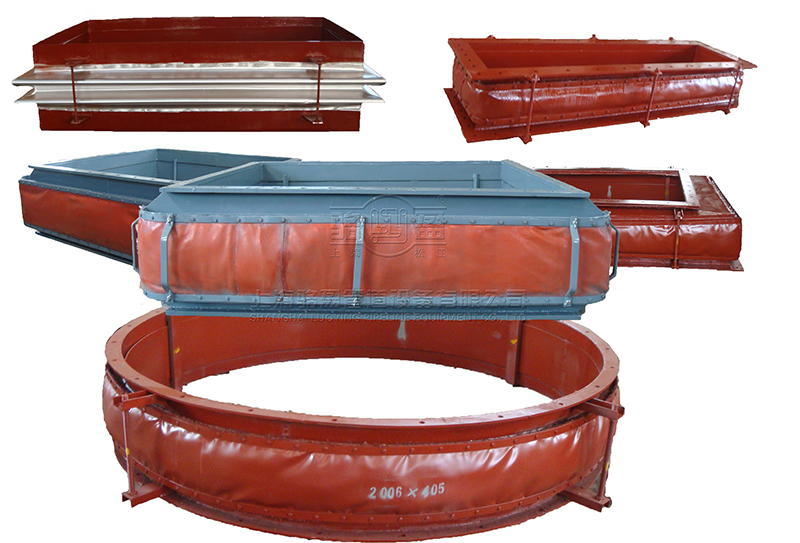
Les joints de dilatation en tissu assurent la compensation des défauts d’alignement et de la dilatation thermique des conduits, notamment dans les centrales électriques et autres réseaux de canalisations. On les retrouve partout où il est nécessaire de transporter des fluides chauds dans des applications basse pression, telles que l’air entrant et les gaz sortants dans les grands procédés de combustion.
Les joints de dilatation en tissu assurent à la fois l’isolation et la protection contre l’usure, tout en compensant efficacement la dilatation thermique et les vibrations.
Les avantages des joints de dilatation en tissu varient selon l’application, l’environnement et d’autres facteurs liés aux procédés industriels.
Ils offrent une flexibilité exceptionnelle et permettent de gérer d’importants mouvements thermiques dans un espace relativement réduit.
Les joints de dilatation en tissu peuvent absorber des mouvements plus importants que les joints métalliques, et ce sans efforts de rappel. Ce point est essentiel pour limiter les contraintes thermiques dans les conduits, leurs supports et les équipements associés.
Ces joints sont utilisés pour apporter de la flexibilité aux réseaux de canalisations industriels et aux raccordements de ventilateurs et soufflantes, afin d’absorber la dilatation thermique, d’isoler les vibrations et le bruit, et de compenser les défauts d’alignement. Leur capacité à absorber de grands mouvements dans un espace limité, leurs faibles efforts de rappel et leur large plage de température leur confèrent des avantages uniques par rapport aux autres types de joints. Ils sont indispensables dans de nombreux secteurs industriels : énergie, pétrochimie, pâte à papier et papier, ainsi que dans d’innombrables installations industrielles. Différents modèles et matériaux sont proposés pour répondre aux exigences spécifiques de chaque application.
Les joints de dilatation pour conduits entièrement moulés de haute qualité sont réalisés en élastomères caoutchouc renforcés, avec l’avantage de brides intégrées et d’une installation simplifiée. Ils peuvent être équipés ou non de voûtes moulées, qui offrent une capacité de mouvement supplémentaire et une fiabilité accrue.
Matériaux :
Fluoroplastiques (PTFE), élastomères fluorés (FKM), néoprène (250 °F), silicone (450 °F). Si nécessaire, le renfort peut également être remplacé par des mélanges d’aramides, de polyester ou d’autres matériaux.
Applications :
Centrales électriques à combustibles fossiles, usines de pâte à papier et de papier, raccordements entre récupérateurs d’air et broyeurs de charbon, cimenteries, raccordements entre refroidisseurs de clinker et échangeurs de chaleur, etc.
Fluides transportés :
Huile, air propre, températures de fonctionnement de 600 °F à 750 °F, gaz de combustion chargés de particules importantes.

LUOYING
DN5-300
Up to 1 bar
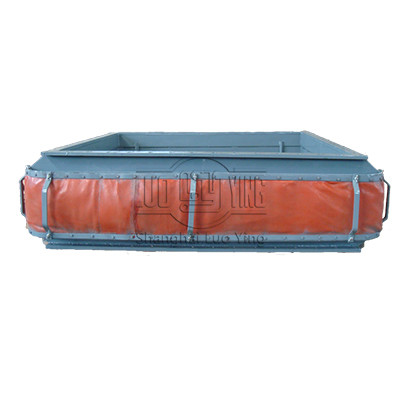
Rectangular duct fabric compensator is composed by rubber and fabric composite materials, steel flange, sleeve, thermal insulation materials. Mainly used in various fan, air duct for flexible connection. The function is shock absorption, noise reduction,
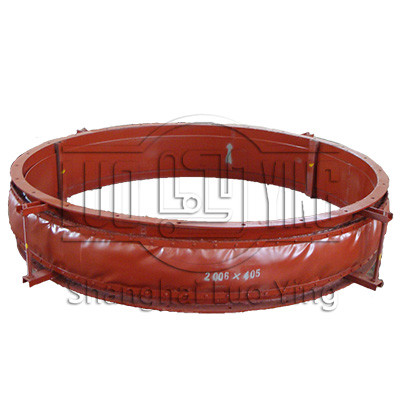
LUOYING Fabric Expansion Joints are non-metallic flue duct expansion joints that provide stress relief for piping and ducting systems by absorbing thermal growth and shock, isolating mechanical vibration, and allowing for misalignments.LUOYING expansi...
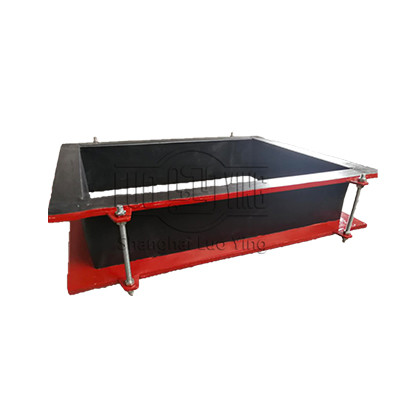
Air flue rubber joint compensator is composed by rubber composite materials, steel flange, sleeve, thermal insulation materials. Mainly used in various fan, air duct for flexible connection. The function is shock absorption, noise reduction, sealing, medi
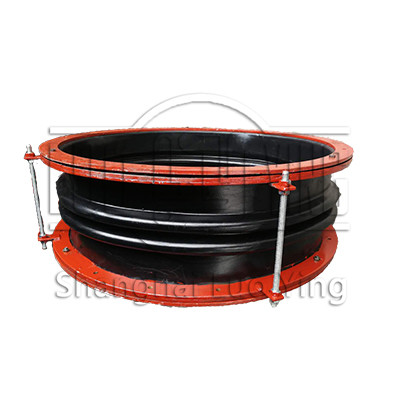
Flue duct expansion jointsare custom engineered to handle low pressure (±3 psig) applications with temperatures ranging from -100°F to more than 2000°F. Industry Proven materials and precise engineering go into every LUOYING Fabric Expansion joint.
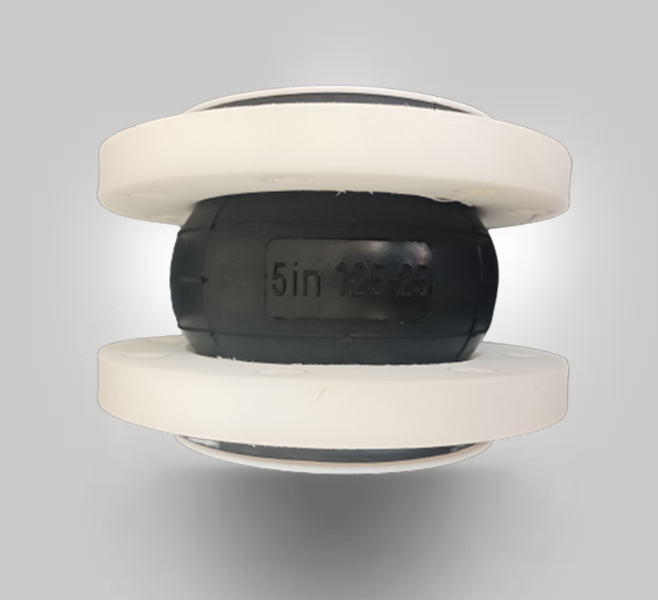
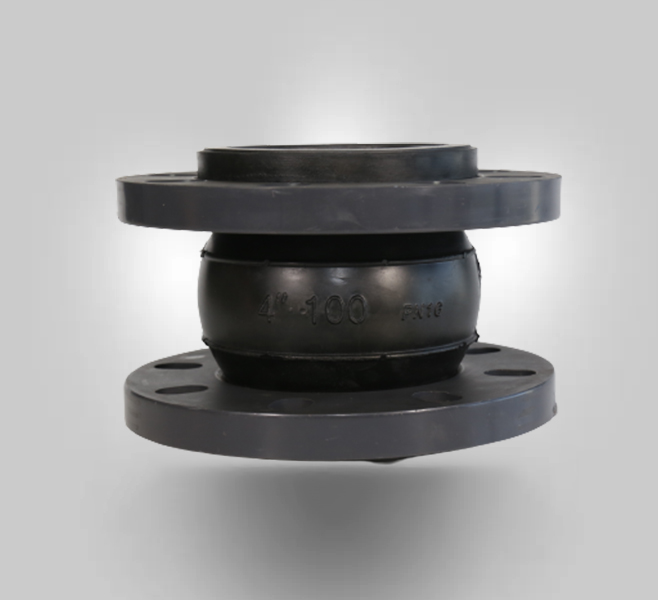
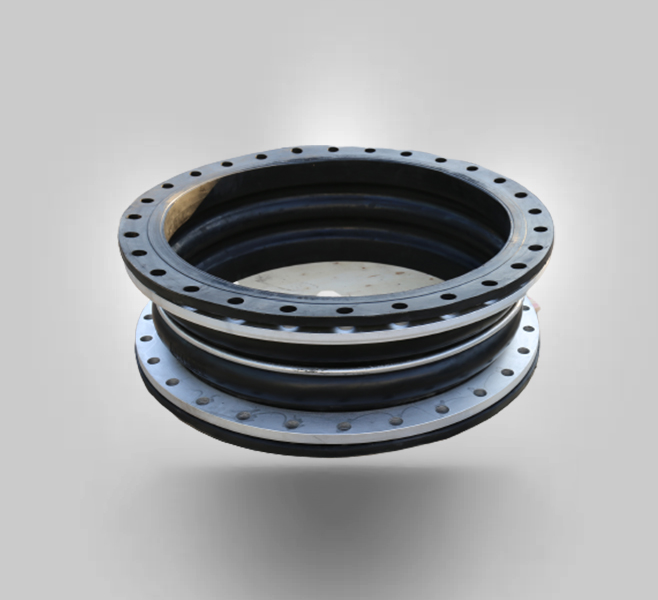
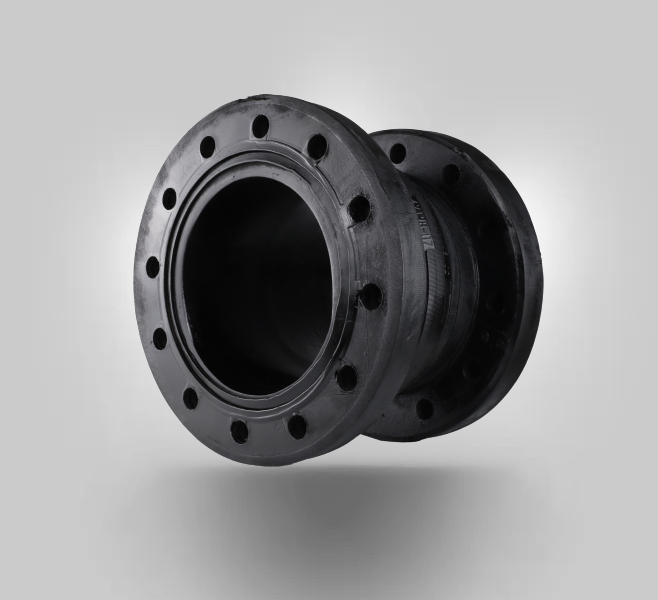
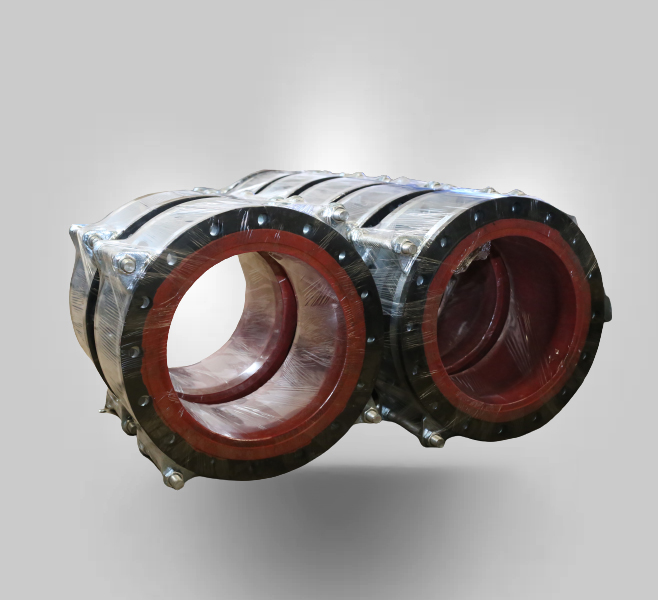
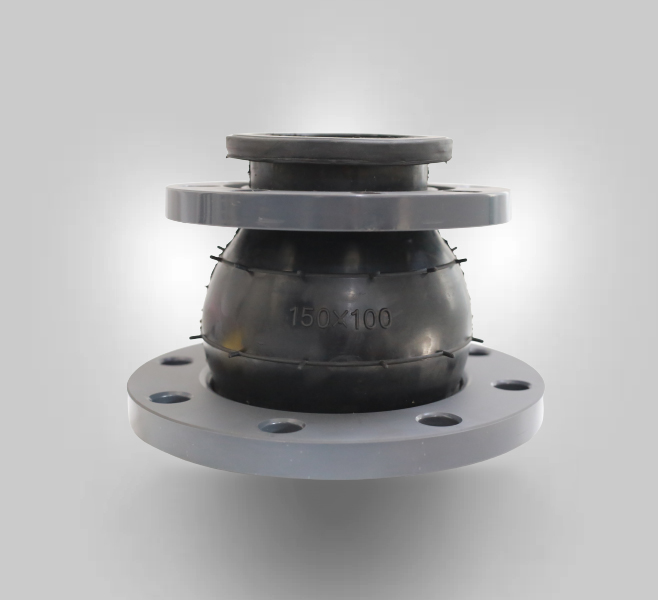
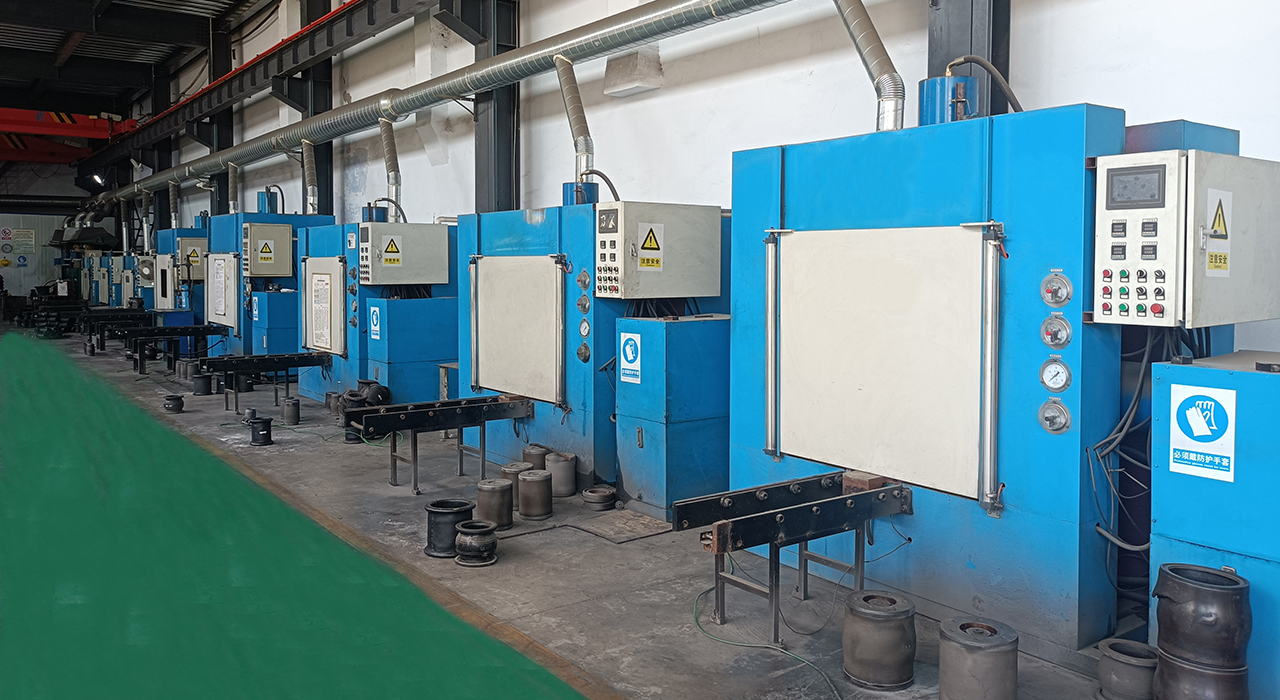
Rubber expansion joints are mainly manufactured by manual wrapping of rubber sheets and fabric reinforced rubber sheets around a bellows-shaped product mandrel. Besides rubber and fabric, reinforced rubber and/or steel wires or metal rings are added for additional reinforcement. After the entire product is built up on the mandrel, it is covered with a winding of (nylon) peel ply to pressurize all layers together. Because of the labor-intensive production process, a large part of the production has moved to eastern Europe and Asian countries.
Some types of rubber expansion joints are made with a molding process. Typical joints that are molded are medium-sized expansion joints with bead rings, which are produced in large quantities. These rubber expansion joints are manufactured on a cylindrical mandrel, which is wrapped with bias cut fabric ply. At the end the bead rings are positioned and the end sections are folded inwards over the bead rings. This part is finally placed in a mold and molded into shape and vulcanized. This is a highly automated solution for large quantities of the same type of joint.
New technology has been developed to wind rubber and reinforcement layers on the (cylindrical or bellows-shaped) mandrel automatically using industrial robots instead of manual wrapping. This is fast and accurate and provides repeatable high quality. Another aspect of using industrial robots for the production of rubber expansion joints is the possibility to apply an individual reinforcement layer instead of using pre-woven fabric. The fabric reinforcement is pre-woven and cut at the preferred bias angle. With individual reinforcement it is possible to add more or less fiber material at different sections of the product by changing the fiber angles over the length of the product.
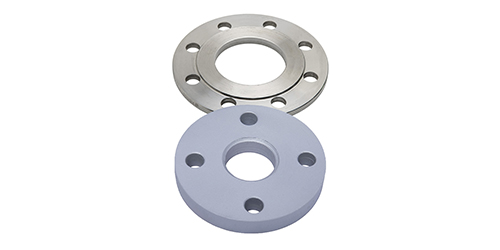
Piping components can be bolted together between flanges. Flanges are used to connect pipes with each other, to valves, to fittings, and to specialty items such as strainers and pressure vessels. A cover plate can be connected to create a "blind flange" Flanges are joined by bolting, and sealing is often completed with the use of gaskets or other methods. Mechanical means to mitigate effects of leaks, like spray guards or specific spray flanges, may be included. Industries where flammable, volatile, toxic or corrosive substances are being processed have greater need of special protection at flanged connections. Flange guards can provide that added level of protection to ensure safety.
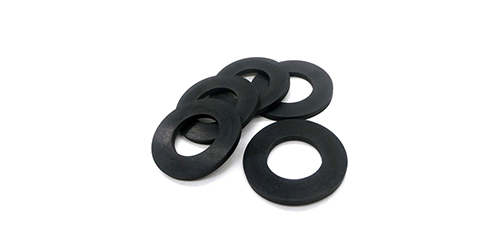
Fasteners are used for fastening and securing materials such as wood, metal, plastic, or concrete. They include nuts and bolts, threaded rods, structural bolts, machine screws, wedge anchors, washers, rivets, and more in a variety of types and sizes, including metric and inch.
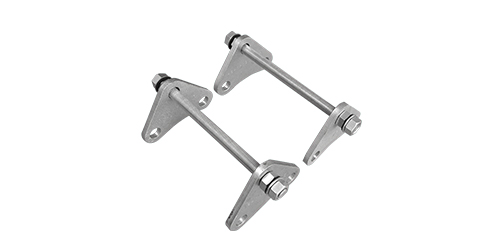
In systems that have a media with significant particulate content (i.e. flash or catalyst), a barrier of ceramic fiber can be utilized to prevent corrosion and restricted bellows flexibility resulting from the accumulation of the particulate. Purge connectors may also be utilized to perform this same function. Internal liners must also be included in the design if the expansion joint includes purge connectors or particulate barriers.
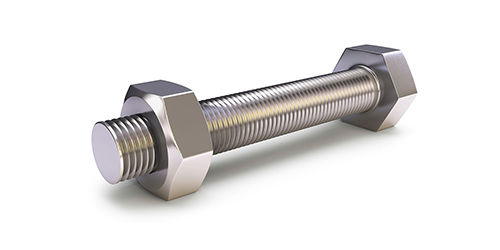
A gasket is a mechanical seal which fills the space between two or more mating surfaces, generally to prevent leakage from or into the joined objects while under compression. It is a deformable material that is used to create a static seal and maintain that seal under various operating conditions in a mechanical assembly.