

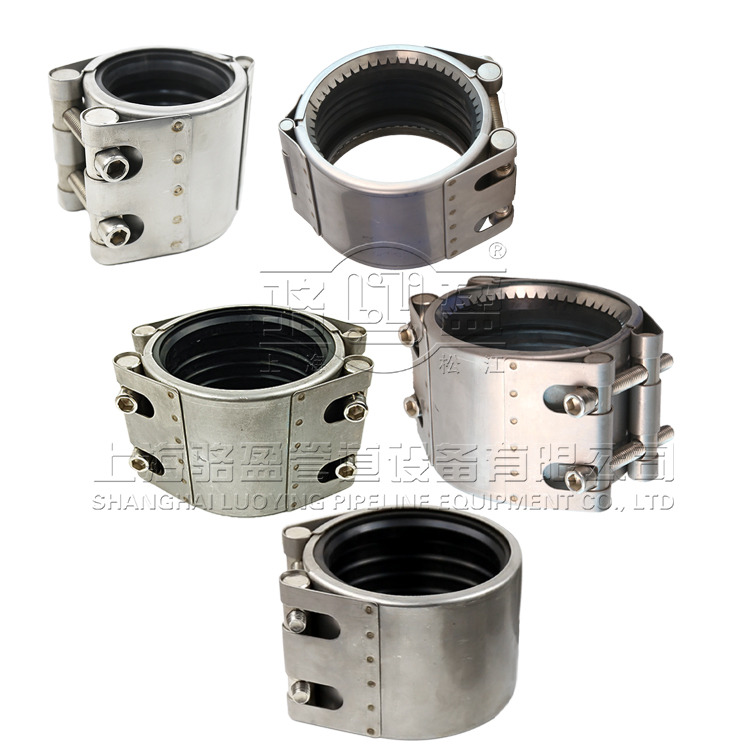
Les réseaux d’alimentation en eau peuvent subir des fuites dues à la corrosion ou aux fissures avec le temps. Les canalisations endommagées occasionnent de graves problèmes. Ces conduites doivent être réparées le plus rapidement et en toute sécurité, avec une solution durable pour limiter les pertes d’eau. Les réparations classiques demandent souvent beaucoup de temps et d’argent.
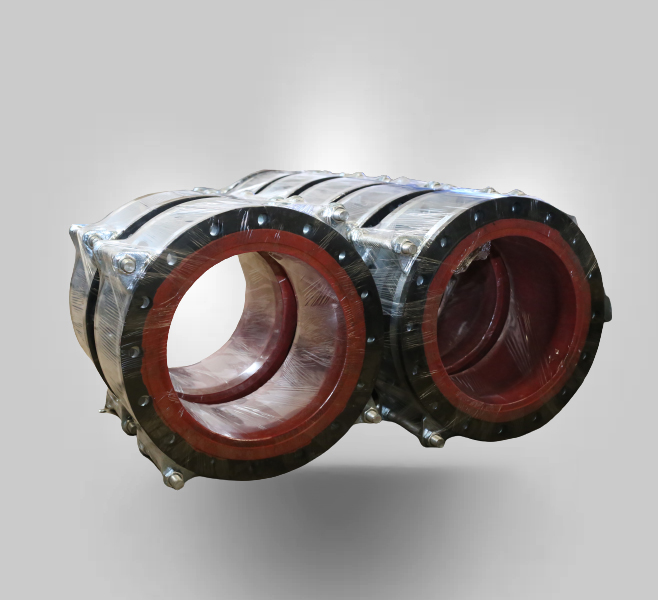
Le collier de réparation en acier inoxydable constitue une solution rapide, professionnelle et sans entretien. Quelles que soient la complexité et la gravité des dommages, nos colliers en acier inoxydable permettent une réparation permanente des fissures et perforations sur canalisations. Ils conviennent aussi bien à une utilisation temporaire qu’à une installation définitive, et offrent une durée de vie équivalente aux autres composants du réseau.
Fabriqués avec de l’acier inoxydable de haute qualité et des joints en caoutchouc performants, ils s’adaptent à de multiples applications : réseaux d’eau potable, assainissement et secteurs industriels.
Grâce à leur plage de diamètre extérieur variable, un même collier peut s’adapter à plusieurs dimensions de tuyaux. Cela réduit considérablement les besoins en stock pour couvrir l’ensemble des types et tailles de canalisations.
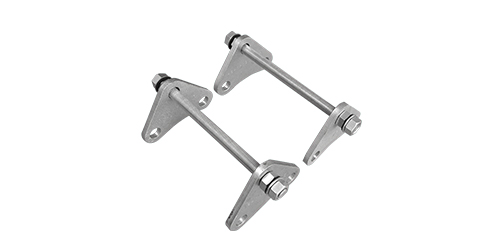
Boulons et barres de blocage
Acier inoxydable (disponible en qualité T-304 et T-316)
Domaine d’application
Les colliers rapides assurent une réparation rapide et économique des petits dommages sur tuyaux. Ils sont largement utilisés sur les navires et par les plombiers pour les réparations hors sol.
La garniture caoutchoutée recouvre partiellement l’intérieur de la bande métallique et permet de colmater les petits trous causés par la corrosion ou le gel.

LUOYING
Up to DN 5000
support
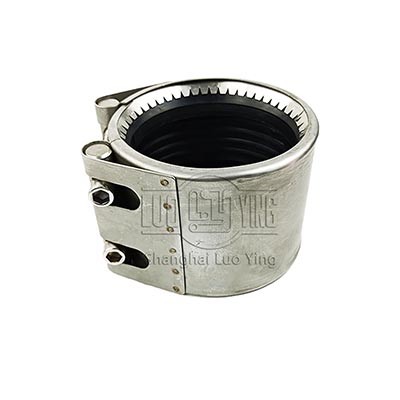
The use of high quality Stainless Steel and Nitrile Rubber gaskets permits use of the product in a range of applications from reticulated water and sewerage to industrial use. A Repair Clamp’s variable OD Range enables a single clamp to adapt to any pipe OD within that variable range. This dramatically reduces the stocking requirement to cater for each individual pipe type and size.
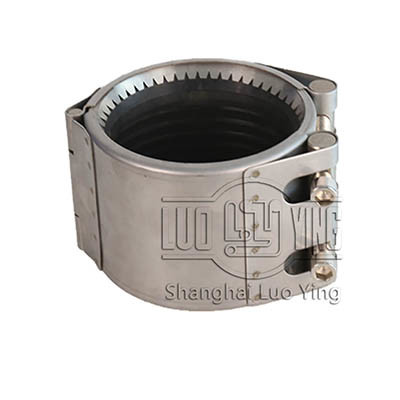
The use of high quality Stainless Steel and Nitrile Rubber gaskets permits use of the product in a range of applications from reticulated water and sewerage to industrial use. A Repair Clamp’s variable OD Range enables a single clamp to adapt to any pipe OD within that variable range. This dramatically reduces the stocking requirement to cater for each individual pipe type and size.
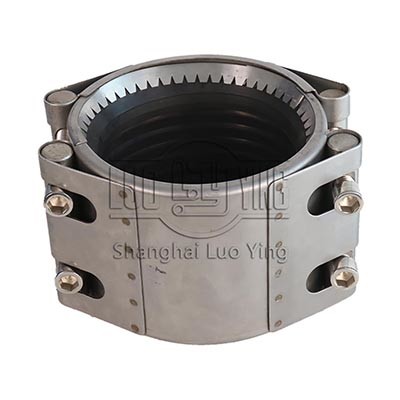
Leaking water pipes can cause serious problems. The damaged pipes must be repaired as soon and safe as possible, but also durably to prevent waterloss. LuoYing pipes has avariety of repair clamps to fix a variety of pipes. From snap clamps to joint leak clamps and more, our repair clamps are made to repair holes or breaks in water mains.
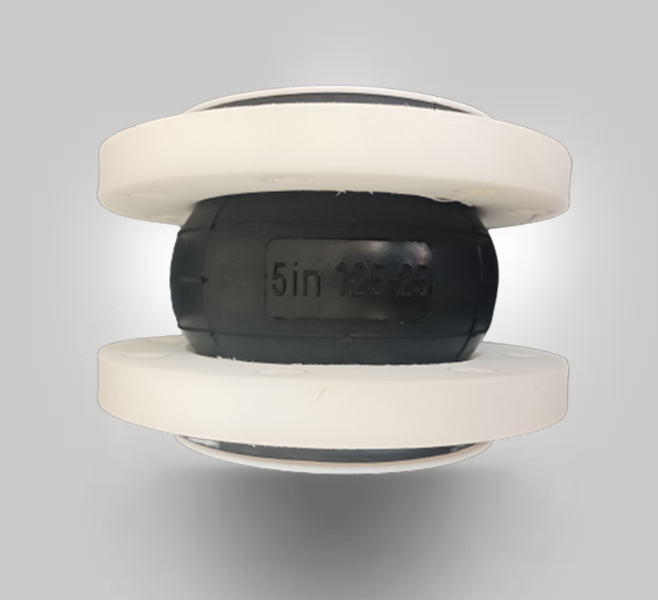
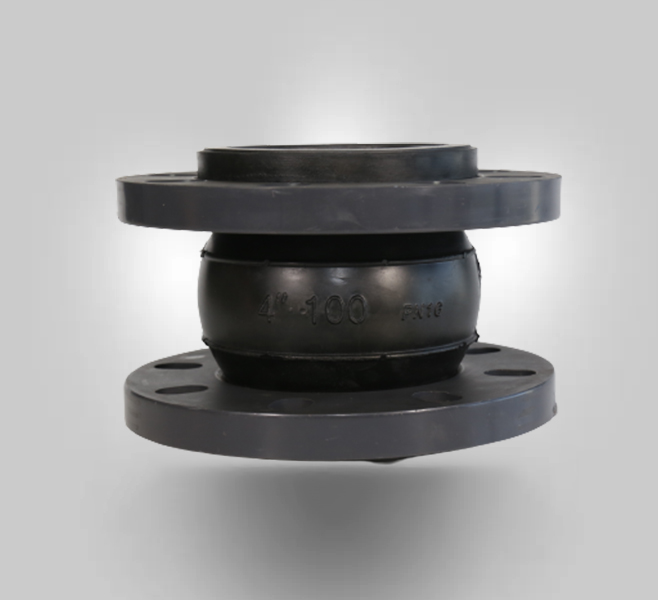
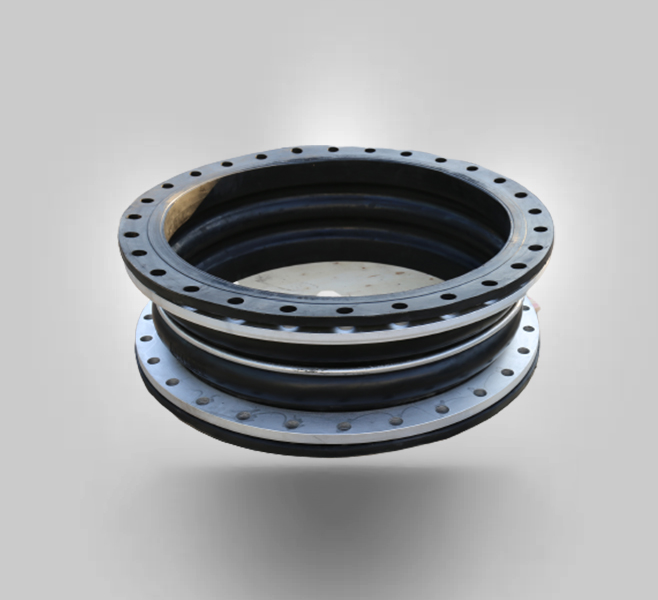
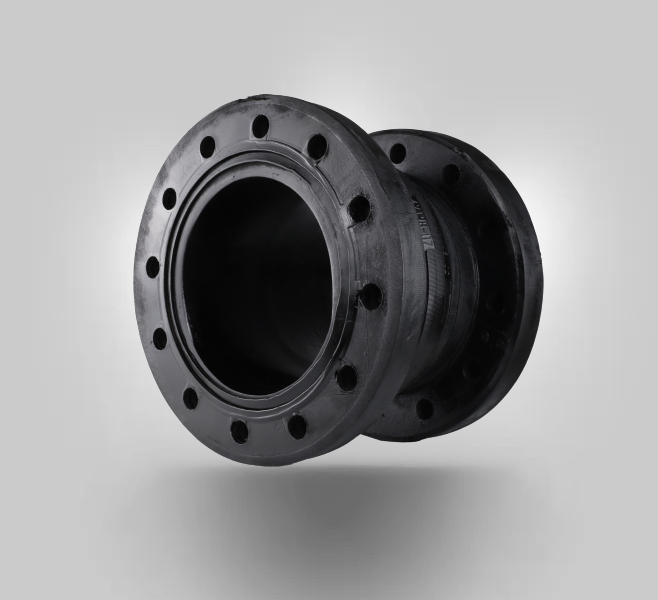
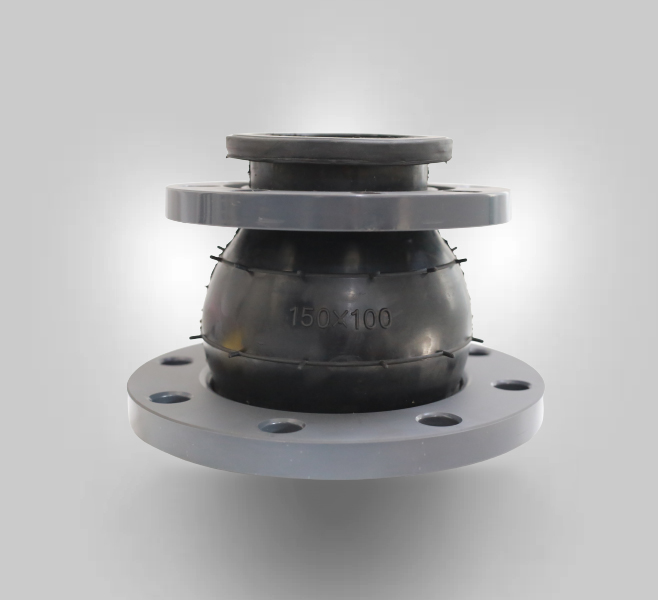
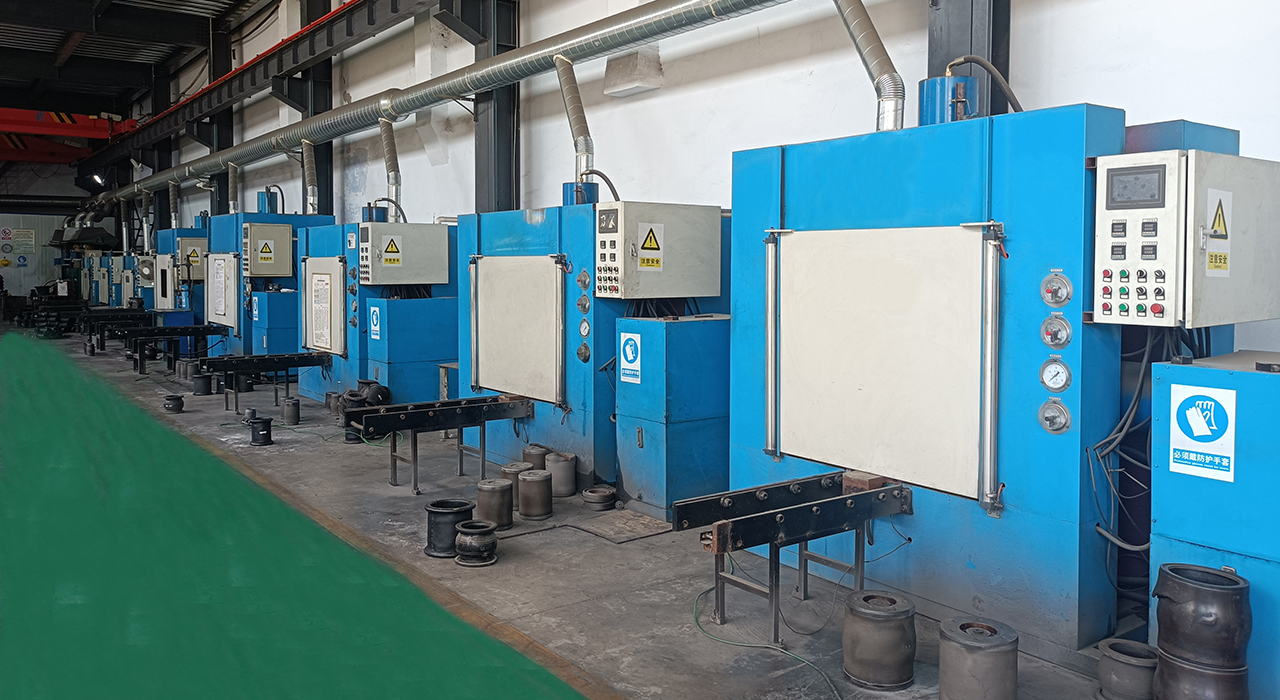
Rubber expansion joints are mainly manufactured by manual wrapping of rubber sheets and fabric reinforced rubber sheets around a bellows-shaped product mandrel. Besides rubber and fabric, reinforced rubber and/or steel wires or metal rings are added for additional reinforcement. After the entire product is built up on the mandrel, it is covered with a winding of (nylon) peel ply to pressurize all layers together. Because of the labor-intensive production process, a large part of the production has moved to eastern Europe and Asian countries.
Some types of rubber expansion joints are made with a molding process. Typical joints that are molded are medium-sized expansion joints with bead rings, which are produced in large quantities. These rubber expansion joints are manufactured on a cylindrical mandrel, which is wrapped with bias cut fabric ply. At the end the bead rings are positioned and the end sections are folded inwards over the bead rings. This part is finally placed in a mold and molded into shape and vulcanized. This is a highly automated solution for large quantities of the same type of joint.
New technology has been developed to wind rubber and reinforcement layers on the (cylindrical or bellows-shaped) mandrel automatically using industrial robots instead of manual wrapping. This is fast and accurate and provides repeatable high quality. Another aspect of using industrial robots for the production of rubber expansion joints is the possibility to apply an individual reinforcement layer instead of using pre-woven fabric. The fabric reinforcement is pre-woven and cut at the preferred bias angle. With individual reinforcement it is possible to add more or less fiber material at different sections of the product by changing the fiber angles over the length of the product.
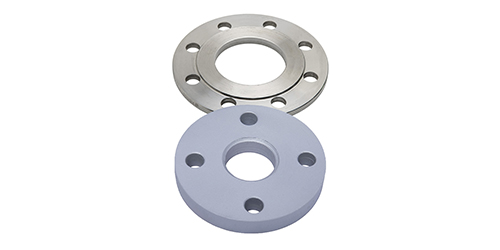
Piping components can be bolted together between flanges. Flanges are used to connect pipes with each other, to valves, to fittings, and to specialty items such as strainers and pressure vessels. A cover plate can be connected to create a "blind flange" Flanges are joined by bolting, and sealing is often completed with the use of gaskets or other methods. Mechanical means to mitigate effects of leaks, like spray guards or specific spray flanges, may be included. Industries where flammable, volatile, toxic or corrosive substances are being processed have greater need of special protection at flanged connections. Flange guards can provide that added level of protection to ensure safety.
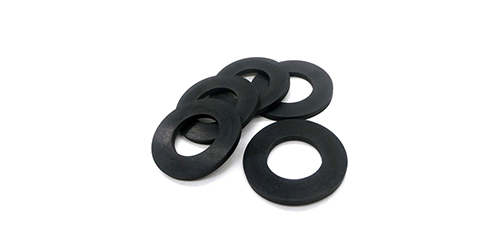
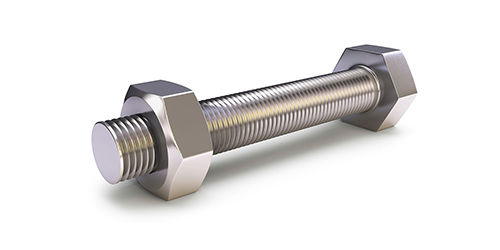
Fasteners are used for fastening and securing materials such as wood, metal, plastic, or concrete. They include nuts and bolts, threaded rods, structural bolts, machine screws, wedge anchors, washers, rivets, and more in a variety of types and sizes, including metric and inch.
In systems that have a media with significant particulate content (i.e. flash or catalyst), a barrier of ceramic fiber can be utilized to prevent corrosion and restricted bellows flexibility resulting from the accumulation of the particulate. Purge connectors may also be utilized to perform this same function. Internal liners must also be included in the design if the expansion joint includes purge connectors or particulate barriers.
A gasket is a mechanical seal which fills the space between two or more mating surfaces, generally to prevent leakage from or into the joined objects while under compression. It is a deformable material that is used to create a static seal and maintain that seal under various operating conditions in a mechanical assembly.